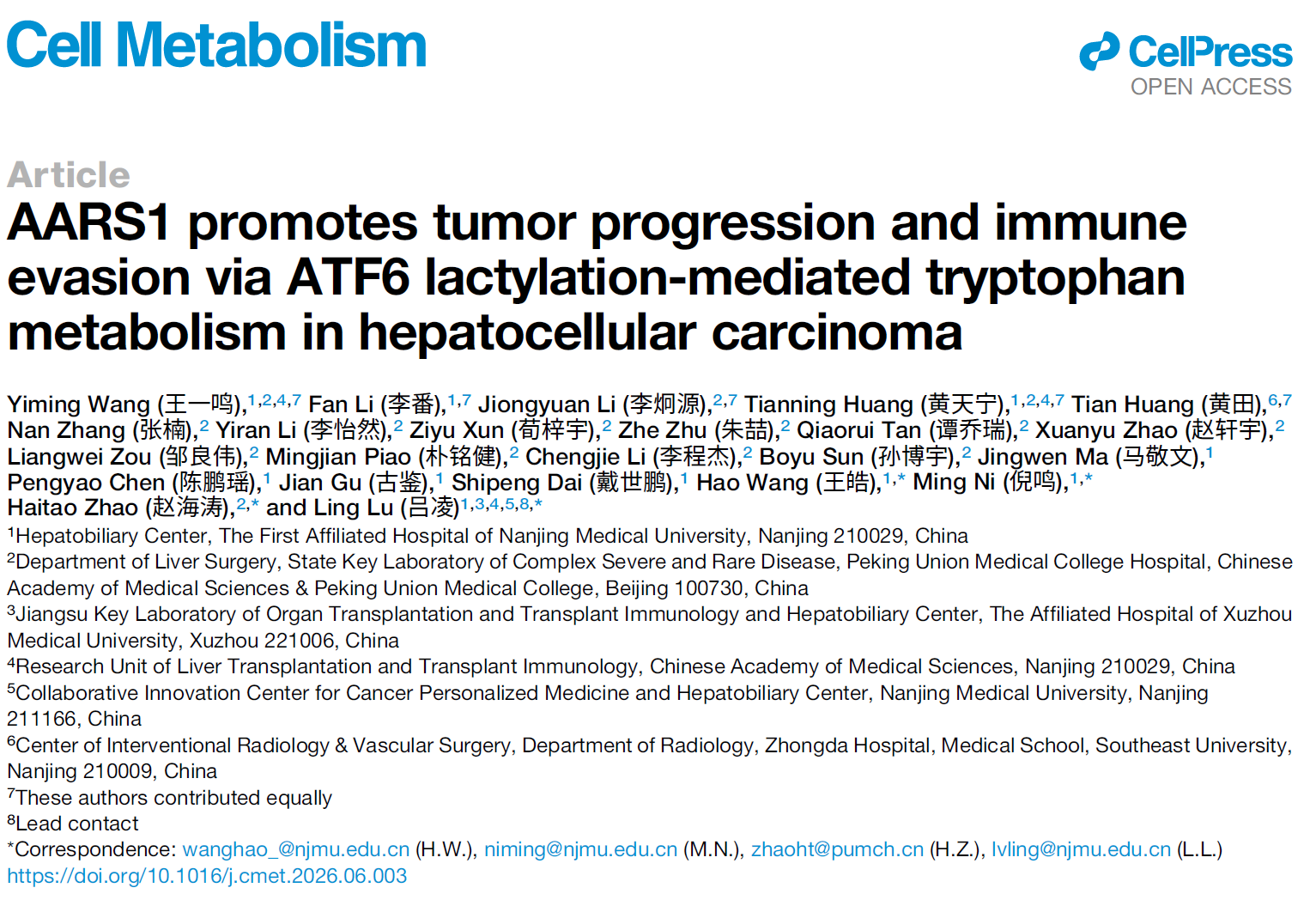
On June 30, 2026, Professor Ling Lü’s team from the First Affiliated Hospital of Nanjing Medical University published a research article in Cell Metabolism entitled “AARS1 promotes tumor progression and immune evasion via ATF6 lactylation-mediated tryptophan metabolism in hepatocellular carcinoma.”
The study identifies AARS1 as a lactate-sensing protein that activates the endoplasmic reticulum stress protein ATF6 through lactylation, thereby linking lactate metabolism with tryptophan metabolism. The tryptophan metabolite kynurenine promotes NAMPT upregulation in regulatory T cells. Intracellular NAMPT enhances Treg differentiation and function, whereas extracellular NAMPT feeds back to tumor cells, promoting glycolysis and lactate production. Notably, targeting AARS1 with β-alanine improved the therapeutic efficacy of PD-1/PD-L1 blockade, suggesting a potential new strategy for immunotherapy in hepatocellular carcinoma.
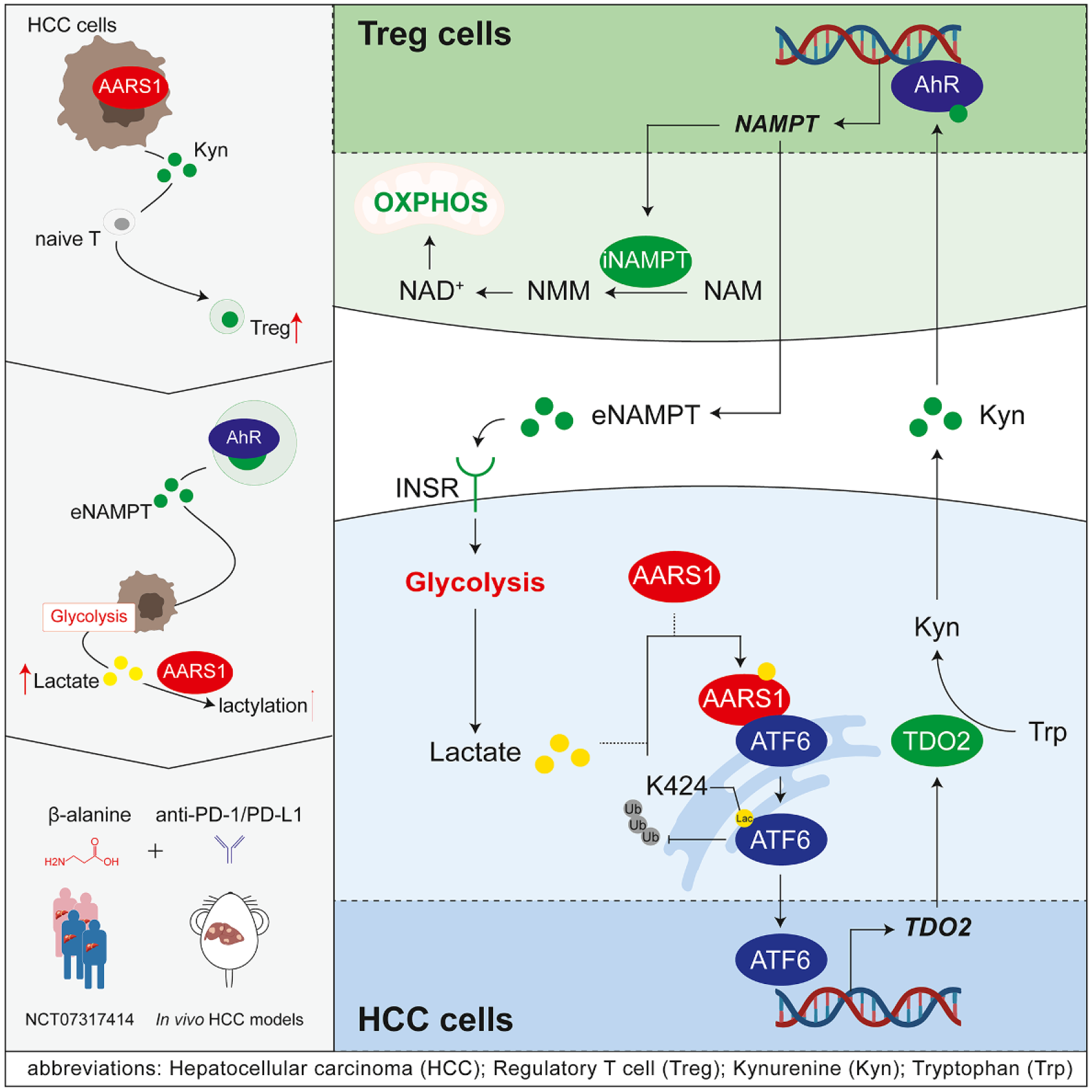
Professor Ling Lü’s team has long focused on two major clinical challenges in hepatocellular carcinoma: the low response rate to immunotherapy and the frequent emergence of acquired resistance after treatment. Focusing on the tumor metabolic microenvironment and Treg-mediated immunosuppression, the team was among the first to propose that targeting the metabolism of tumor-infiltrating Tregs could enhance immunotherapeutic efficacy, as reported in Trends in Immunology in 2023.
By integrating single-cell transcriptomics, spatial transcriptomics, spatial metabolomics, modification proteomics, and multiple knockout mouse models, the team has systematically investigated three key questions regarding tumor-infiltrating Tregs: their origin, function, and long-term survival. Their studies have revealed that AARS1 bridges lactate metabolism and tryptophan metabolism to drive Treg differentiation and promote intratumoral Treg accumulation (Cell Metabolism, 2026); that the tumor metabolite lactate enhances TGFβ signaling through MOESIN lactylation to promote Treg function (Cell Reports, 2022); that N-glycan metabolism enhances mitochondrial oxidative phosphorylation and Treg function through N-glycosylation (JCI, 2024); and that ammonia, a waste product of tumor glutamine metabolism, can be detoxified and reutilized by Tregs to sustain their long-term survival within tumors, thereby explaining the mechanism underlying acquired resistance to PD-1 therapy.
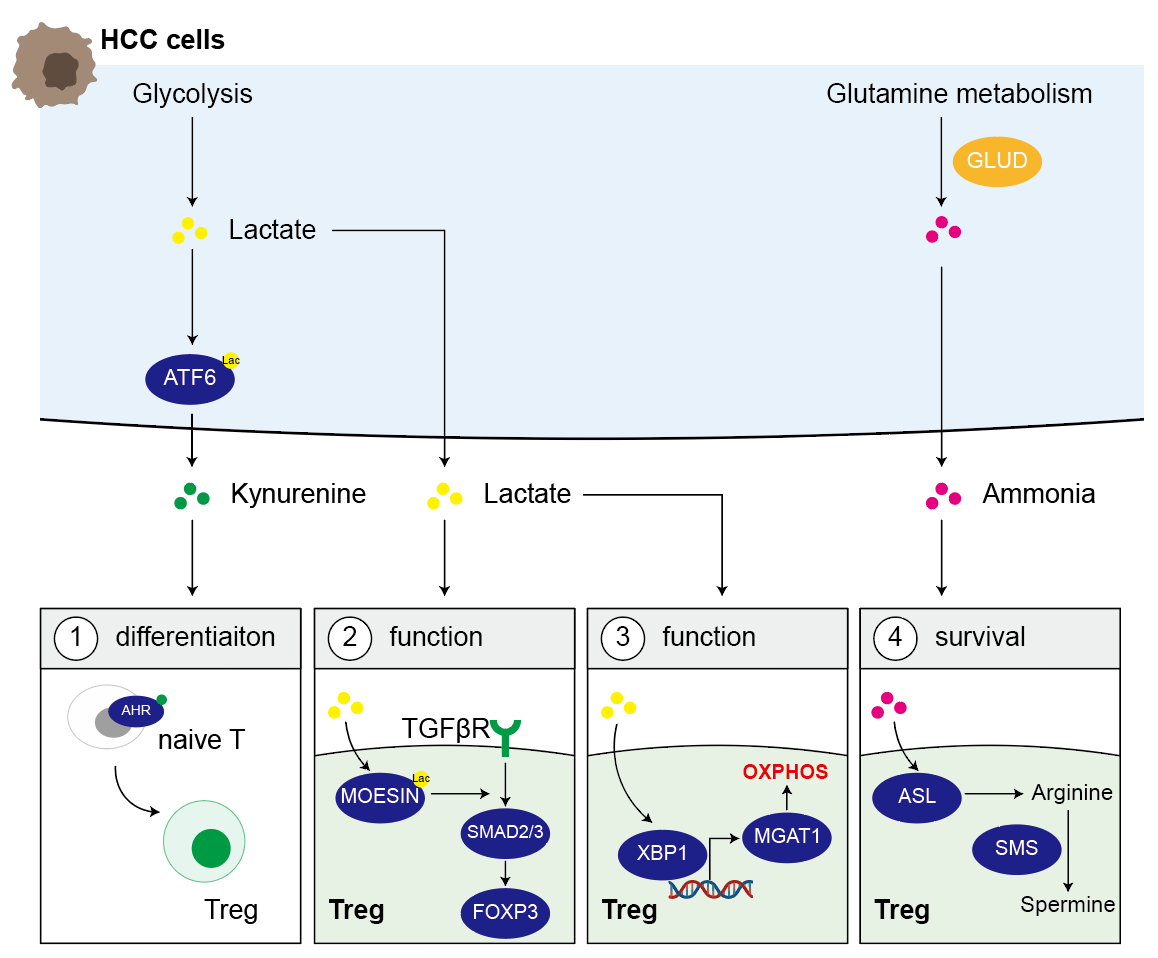
Professor Ling Lü, Professor Ming Ni, and Professor Hao Wang from the First Affiliated Hospital of Nanjing Medical University, together with Professor Haitao Zhao from Peking Union Medical College Hospital, are the co-corresponding authors of this article. Yiming Wang, a 2021 master’s student; Fan Li, a 2023 master’s student; Tianning Huang, a 2022 master’s student; Tian Huang, a 2021 master’s student from the First Clinical Medical College of Nanjing Medical University; and Jiongyuan Li, a 2023 doctoral student from Peking Union Medical College, are the co-first authors of this article.
(Drafted by Professor Ling Lü’s team; Translation revised by Wenbo Wu )