

Recently, the research team led by Shen Chen from the School of Nursing, NMU, published an original research paper titled "A nurse-led bedside diagnostic model using cervical tracheal breath sounds to detect silent aspiration in dysphagia patients: A prospective diagnostic accuracy study" in the International Journal of Nursing Studies. According to the latest Chinese Academy of Sciences journal ranking, the journal is listed as Q1 in both the Medical Sciences category and the Nursing subcategory (SCI Impact Factor: 7.1), and ranks first globally among nursing journals.
Silent aspiration is a major complication in dysphagia patients. Unlike overt aspiration, it presents no obvious symptoms and is therefore easily overlooked. The absence of a cough reflex to expel foreign material makes silent aspiration more harmful and it is a primary cause of aspiration pneumonia. Although video fluoroscopic swallowing studies and fiberoptic endoscopic evaluation of swallowing are recognized as the gold-standard diagnostic methods, they have notable limitations such as radiation exposure, invasiveness, high costs, and reliance on specialized personnel and equipment, restricting their use in homes, communities, and care facilities.
To address these challenges, the research team collected 1,125 respiratory sound segments from dysphagia patients using an electronic stethoscope. .Through spectral analysis, the team extracted acoustic parameters from all breath sounds. By comparing changes in these parameters between non-aspiration and silent aspiration cases. the team identified differential parameters and subsequently constructed an acoustic diagnostic model for detecting silent aspiration.
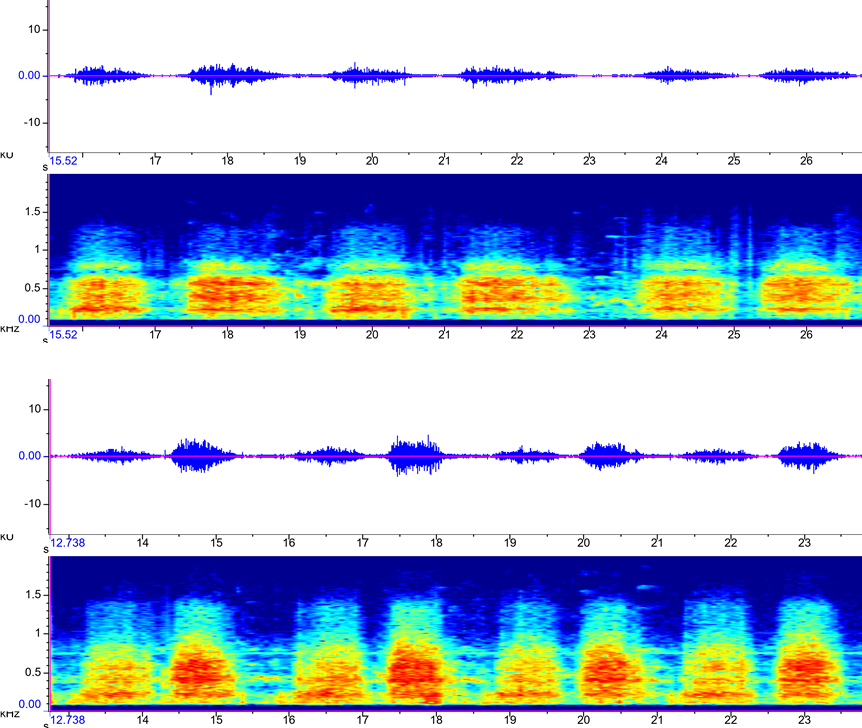
The study identified three parameters of the silent aspiration diagnostic model—aggregate entropy, mean power, and duration—which correspond to the information, frequency, and time domains of sound, respectively. These parameters can partially explain the primary acoustic information of tracheal breath sounds. The diagnostic model demonstrated moderate ability to distinguish between silent aspiration and non-aspiration breath sounds, with acceptable sensitivity and specificity, indicating its utility as a preliminary screening tool for silent aspiration during swallowing.
The findings offer a convenient, non-invasive, and rapid screening method for silent aspiration in settings lacking specialized personnel and equipment, such as homes, communities, and care facilities, thereby promoting early detection of silent aspiration. The model also provides an initial screening tool for all patients with suspected dysphagia, helping identify those requiring further confirmation through gold-standard tests and reducing medical trauma and financial burdens. Additionally, the approach facilitates remote clinical assessment for patients with limited mobility.
Shen Chen from the School of Nursing, NMU, serves as the first author of this paper. Professor Yan Cui from the School of Nursing and Yuanyuan Zhang, Deputy Chief Physician at the affiliated Jiangning Hospital, are the co-corresponding authors. The study is supported by the National Natural Science Foundation of China Youth Program (No. 82202818), led by Shen Chen.
Full-text link: https://doi.org/10.1016/j.ijnurstu.2025.105154
(Drafted and translated by Shen Chen’s research team; Reviewed by Xianwen Li and Qin Xu; Translation revised by Bei Zhang)